In the evolving world of beauty and aesthetics, eyebrow treatments have become an essential aspect of personal grooming and self-expression. Two of the most sought-after treatments today are brow lamination and microblading. While both aim to enhance the appearance of eyebrows, they are fundamentally different in their approach, longevity, and results. Understanding these differences is crucial for choosing the most suitable treatment according to individual skin type, eyebrow density, lifestyle, and desired outcome.
Eyebrows frame the face, enhance facial expressions, and significantly influence the overall aesthetic appearance. As such, professionals have developed advanced techniques to create fuller, well-defined, and naturally beautiful brows. Brow lamination and microblading are popular choices among clients seeking minimal maintenance yet visible results. Both procedures have their unique advantages, and knowing what each entails allows clients to make informed decisions about their beauty regimen.
The following sections provide an in-depth look at brow lamination and microblading, detailing the procedures, benefits, duration, aftercare, and long-term effects. This comprehensive guide is designed for anyone seeking expert-level understanding of eyebrow enhancement treatments.
Understanding Brow Lamination
Brow lamination is a semi-permanent beauty procedure designed to smooth and straighten eyebrow hairs while creating a uniform, upward-facing pattern. The primary goal is to give brows a fuller, fluffier, and more defined appearance without the use of needles or tattoos. Unlike microblading, brow lamination works with natural eyebrow hairs, manipulating them into a desired shape that complements the client’s facial features.
The treatment involves the application of a perming solution to break down the bonds in eyebrow hairs, followed by a setting solution that locks the hairs into the new shape. This process allows stylists to correct asymmetry, fill in sparse areas, and achieve a polished, professional look with minimal effort. The technique is particularly beneficial for clients with unruly or sparse brows, providing them with a consistent shape that can last for several weeks.
Brow lamination is ideal for clients seeking a low-maintenance, pain-free procedure that enhances the natural beauty of their eyebrows. Because it does not involve any invasive techniques, it is suitable for all skin types, including sensitive skin.
Brow Lamination Procedure and Duration
A typical brow lamination session takes approximately 30 to 45 minutes. The process begins with cleansing the brow area to remove any oils, dirt, or makeup residues. This step ensures that the solutions applied later adhere effectively to the hair. Next, a perming solution is applied to relax the hair bonds, allowing the stylist to manipulate the hairs into the desired upward and outward pattern. After the recommended time, a neutralizing solution is applied to set the hairs in place.
Following the chemical application, a nourishing serum or conditioning mask is used to hydrate and protect the brow hairs. Clients are advised to avoid getting their brows wet for the next 24 hours to ensure optimal results. After this initial period, they can style and maintain the brows with minimal effort, using simple brushing techniques or light brow gels.
Brow lamination results typically last between six to eight weeks, depending on hair growth rate and aftercare. The treatment offers a natural, voluminous look without altering the skin or underlying hair follicles.
Benefits of Brow Lamination
Brow lamination provides several advantages for clients seeking enhanced eyebrow aesthetics:
- Fuller Appearance: By lifting and aligning hairs, sparse or thin eyebrows appear denser and more uniform.
- Defined Shape: Brows maintain a consistent shape without the need for daily grooming.
- Low Maintenance: The treatment reduces the effort required for daily styling.
- Pain-Free Process: No needles, tattoos, or invasive techniques are involved.
- Flexible Styling: Hairs can be styled upwards, straight, or slightly curved depending on facial structure.
- Suitable for All Skin Types: Gentle solutions allow the treatment to be used on sensitive skin.
This procedure is especially popular among clients seeking natural-looking, manageable, and enhanced eyebrows without committing to permanent methods.
Understanding Microblading
Microblading is a semi-permanent tattooing technique that creates the illusion of fuller eyebrows through the meticulous application of hair-like strokes. Unlike brow lamination, microblading involves making tiny superficial incisions in the skin and depositing pigment to replicate natural eyebrow hairs. This procedure is suitable for clients looking for long-lasting results, precise shaping, and the ability to correct significant gaps or asymmetry.
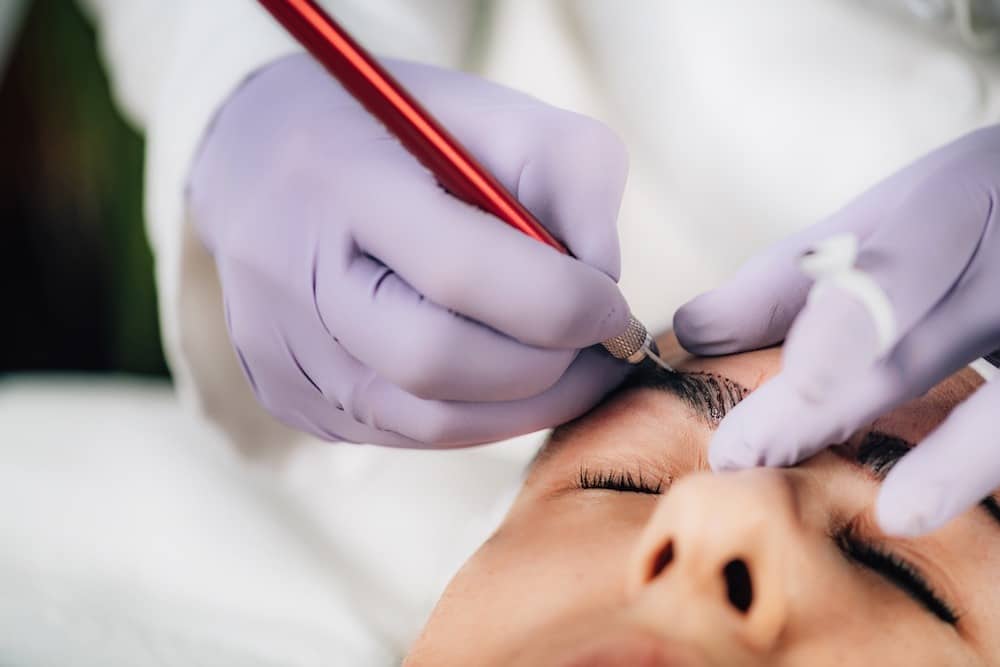
The procedure begins with a consultation to determine the ideal eyebrow shape and color for the client’s facial features and skin tone. The stylist then applies a topical anesthetic to ensure comfort during the session. Using a handheld manual tool, the technician draws fine hair strokes, blending them seamlessly with existing eyebrow hairs. After the session, a protective ointment is applied to aid in healing and maintain pigment retention.
Microblading offers a natural-looking result that can last between 18 months to 3 years, depending on skin type, lifestyle, and aftercare. Clients with oily skin or high exfoliation routines may experience faster pigment fading, necessitating touch-ups every 12 to 18 months.
Microblading Procedure and Duration
A microblading session typically lasts between 30 to 60 minutes, depending on the desired fullness and complexity of the brow design. The procedure is divided into several stages:
- Consultation: Discussing preferred shape, style, and pigment selection.
- Preparation: Cleaning the brow area and applying anesthetic.
- Manual Pigment Application: Creating hair-like strokes with a specialized tool.
- Aftercare Application: Applying protective ointments to aid healing.
Aftercare is essential to ensure pigment longevity and proper healing. Clients are advised to avoid excessive moisture, sun exposure, and exfoliating products for the first few weeks. Regular touch-ups help maintain color intensity and shape over time.
Benefits of Microblading
Microblading offers several advantages for clients seeking a semi-permanent enhancement of their brows:
- Long-Lasting Results: Eyebrows can retain shape and color for up to three years with proper maintenance.
- Customizable Design: Stylists can tailor the brow shape and thickness according to facial structure.
- Natural Hair-Like Appearance: Fine strokes blend seamlessly with natural hairs.
- Time-Saving: Reduces daily makeup application for filling in brows.
- Suitable for Sparse Brows: Effectively fills gaps and corrects asymmetry.
Microblading is especially beneficial for individuals who have lost eyebrow hairs due to over-plucking, medical conditions, or natural thinning.
Comparing Brow Lamination and Microblading
While both treatments aim to enhance eyebrow aesthetics, there are distinct differences that influence the choice between the two:
- Procedure Type: Brow lamination manipulates natural hairs without needles; microblading involves superficial skin incisions and pigment application.
- Longevity: Lamination lasts six to eight weeks; microblading can last 18 to 36 months.
- Maintenance: Lamination requires minimal maintenance; microblading may require periodic touch-ups.
- Pain Factor: Lamination is pain-free; microblading involves minor discomfort due to manual pigment application.
- Appearance: Lamination creates uniform, lifted brows; microblading provides hair-like strokes for a more detailed, natural look.
Choosing the right treatment depends on personal preference, lifestyle, skin type, and the desired outcome.
Who Should Choose Brow Lamination?
Brow lamination is ideal for clients who:
- Have natural eyebrow hairs but struggle with styling
- Desire a fuller and defined appearance without needles
- Prefer a temporary enhancement that is low maintenance
- Seek a pain-free procedure suitable for sensitive skin
This treatment is also recommended for clients who want to enhance their brow shape before special events or photoshoots.
Who Should Choose Microblading?
Microblading is recommended for clients who:
- Have sparse or thin eyebrows
- Want long-lasting semi-permanent results
- Seek precise, customized brow shapes
- Desire natural hair-like strokes for a realistic effect
- Are willing to follow proper aftercare routines for longevity
Microblading is suitable for those committed to maintaining their brows over an extended period.
Enhancing Results with Complementary Treatments
Both brow lamination and microblading can be combined with additional eyebrow treatments to optimize results:
- Tinting: Adds color depth to both laminated and microbladed brows
- Nourishing Serums: Promotes hair growth and strengthens natural hairs
- Hydration Treatments: Maintains healthy, soft, and glossy eyebrows
By integrating these complementary treatments, clients can achieve enhanced fullness, definition, and overall eyebrow health.
Aftercare Guidelines
Proper aftercare ensures the longevity and quality of both treatments:
- Avoid water, excessive sweating, and makeup on the brow area for the first 24 hours after lamination
- For microblading, avoid exfoliants, sun exposure, and heavy skincare products on the brows during healing
- Apply recommended serums and protective ointments as instructed
- Schedule regular touch-ups for microblading to maintain pigment intensity
Following these guidelines prevents premature fading, maintains shape, and prolongs the lifespan of the treatment.
Conclusion
Brow lamination and microblading are innovative, professional techniques that provide tailored solutions for eyebrow enhancement. Lamination offers a non-invasive, temporary solution for uniform, lifted brows, while microblading delivers long-lasting, hair-like strokes for sparse or thinning eyebrows. Choosing the right procedure depends on individual preferences, desired outcomes, and commitment to aftercare.
Both treatments allow clients to achieve aesthetically appealing, natural-looking brows that frame the face and elevate overall appearance. With expert guidance and professional application, clients can enjoy enhanced brow density, definition, and style that complements their unique features.
