Well-shaped eyebrows can bring balance to your facial features and create a polished appearance. Even small changes to the brow shape can make a noticeable difference, which is why choosing the right hair-removal technique matters.
Eyebrow threading and tweezing are two common ways to remove unwanted brow hair. Tweezing removes individual hairs with a pair of tweezers, while threading uses a twisted thread to remove multiple hairs in a controlled movement.
Both methods can be useful, but professional eyebrow threading can make it easier to create a consistent shape, clean up the brow line, and remove several unwanted hairs efficiently.
At Blink Lash Club in Downtown Manhattan, professional threading helps clients maintain neat, defined eyebrows that complement their natural features.
What Is Eyebrow Threading?
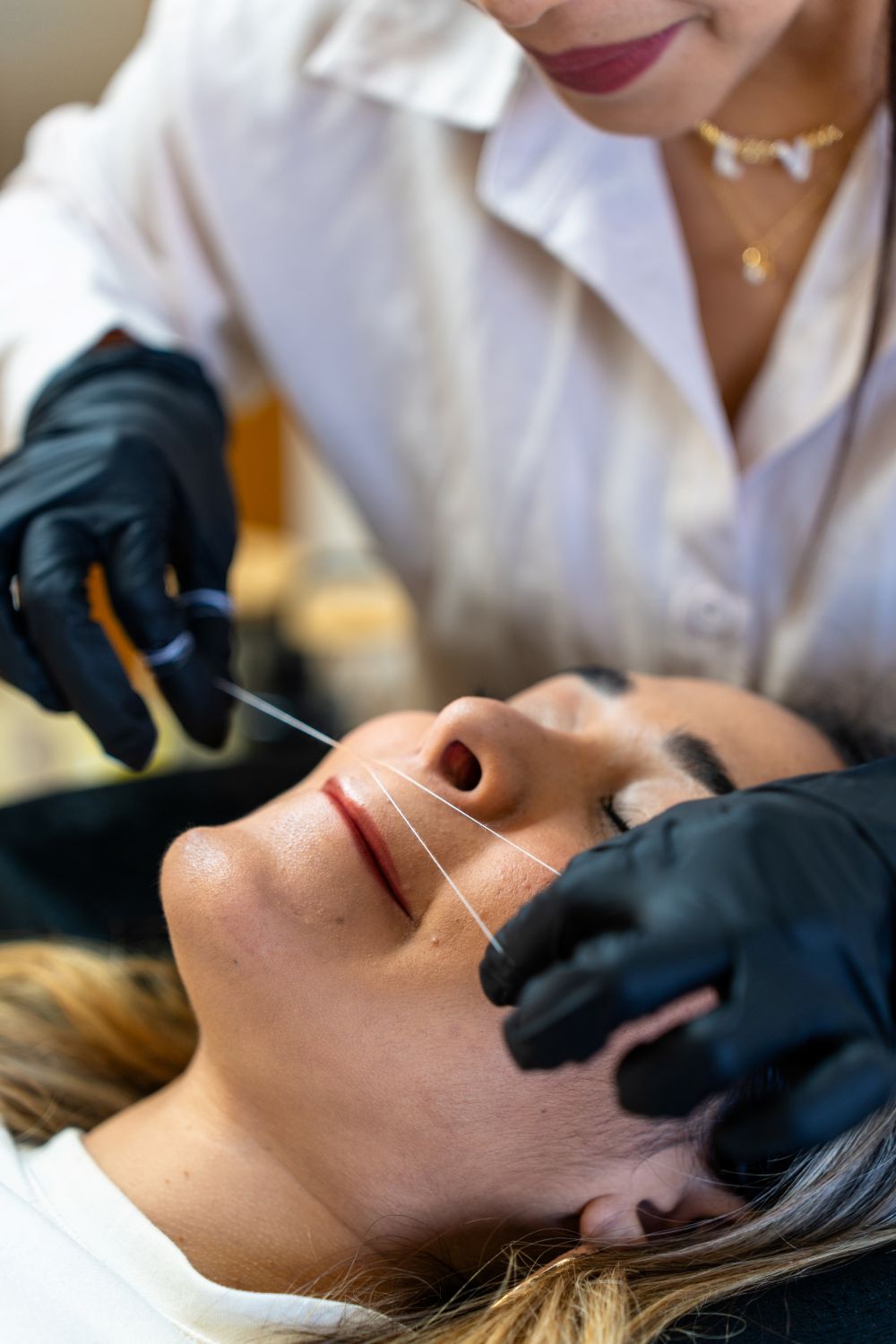
Eyebrow threading is a hair-removal technique that uses a twisted cotton thread to catch and remove unwanted hairs from the root.
A trained threading professional guides the thread along specific areas of the brow to shape the upper and lower edges, clean up stray hairs, and refine the overall appearance.
Threading offers precise control over the area being treated. It can be especially useful when several small hairs need to be removed to create a cleaner brow outline.
The technique can also be used on other facial areas, including the upper lip, chin, and sides of the face.
What Is Eyebrow Tweezing?
Tweezing uses small tweezers to grasp and remove individual hairs.
It is a practical option for removing a few stray hairs or maintaining an existing brow shape between professional appointments.
However, tweezing requires the user to identify and remove each hair separately. Shaping an entire brow with tweezers can take longer, particularly when many fine hairs are present.
The result also depends on the user’s technique, lighting, and ability to maintain a consistent shape across both eyebrows.
Eyebrow Threading vs Tweezing: The Main Differences
Threading and tweezing can both remove unwanted hair from the root, but they differ in how the hair is removed and how the brow shape is maintained.
Eyebrow threading:
- Can remove several hairs in one controlled movement.
- Allows a professional to refine longer sections of the brow line.
- Can help create a consistent shape across both eyebrows.
- Does not require wax or adhesive products.
- Can be efficient when cleaning up multiple areas.
Eyebrow tweezing:
- Removes individual hairs.
- Works well for occasional stray hairs.
- Allows targeted removal of specific hairs.
- Can take longer when shaping the entire brow.
- Requires careful attention to symmetry and hair placement.
Neither method is automatically better for every person. The best choice depends on the amount of hair, the desired brow shape, skin sensitivity, and the skill of the person performing the treatment.
Why Threading Can Create a Cleaner Brow Line
One of the main advantages of professional threading is the ability to work along the brow line with controlled movements.
Rather than removing one hair at a time, the thread can catch several hairs within a small area. This can help a professional remove fine stray hairs and refine the outline efficiently.
The result can be a cleaner-looking brow shape with a more consistent upper and lower edge.
Threading is particularly helpful when the goal is to maintain a defined shape without removing too much hair from the natural brow.
More Control Over Brow Shape
Eyebrows are rarely perfectly identical. Differences in hair growth, arch height, and natural density can make shaping both brows evenly challenging.
Professional threading allows the technician to work gradually along each brow and adjust the shape as needed.
The goal is not to force both eyebrows into an identical pattern. Instead, the professional aims for a balanced appearance that respects each brow’s natural structure.
This attention to detail can help create a more polished finish.
Threading Can Remove Fine Stray Hairs
Fine hairs around the brow can affect how clean the overall shape appears.
Tweezers can remove these hairs individually, but the process may take time when several small hairs surround the brow.
Threading can remove groups of fine hairs through controlled movements, making it useful for cleaning up the area around the natural brow shape.
However, the visibility of fine hair and the final result depend on individual hair growth, skin characteristics, and professional technique.
Is Threading Faster Than Tweezing?
For shaping an entire eyebrow, threading can often be more efficient because it removes multiple hairs during each movement.
Tweezing may be convenient when only a few hairs need to be removed.
The time required for either technique depends on how much hair needs to be removed, the desired shape, and the professional’s experience.
For clients with busy schedules in New York City, professional threading can be a practical option for regular brow maintenance.
Threading and Tweezing for Sensitive Skin
People with sensitive skin may respond differently to threading and tweezing.
Threading does not require wax or adhesive products, which can be an advantage for clients who prefer to avoid those products around their eyebrows.
However, threading creates friction against the skin, while tweezing can cause localized discomfort or irritation when hairs are removed. Both methods may cause temporary redness or sensitivity.
If your skin is easily irritated, tell your threading professional before treatment. Avoid threading over broken, inflamed, sunburned, or otherwise irritated skin.
Clients using certain exfoliating products or prescription skincare treatments should ask a qualified skincare professional whether eyebrow hair removal is appropriate for their skin.
Does Threading Help Maintain Natural-Looking Brows?
Yes, threading can be used to create either a subtle cleanup or a more defined brow shape.
The technique allows a professional to remove unwanted hairs while preserving much of the natural brow, provided the treatment is planned carefully.
For clients who prefer natural-looking eyebrows, the focus can remain on cleaning the edges, refining the arch, and removing stray hairs without making the brows look overly thin.
Communicating your preferred shape before the appointment helps the professional understand how much hair you want removed.
Why Professional Brow Shaping Matters
The quality of the final result depends on more than the hair-removal method.
A professional considers the natural brow shape, hair density, facial features, and the client’s preferences before removing hair.
Removing too much hair can make the eyebrows look thinner than intended or change the natural arch. Careful shaping helps preserve the brow’s structure while improving definition.
Professional threading also allows clients to receive guidance on maintaining their brow shape between appointments.
Threading for Different Eyebrow Shapes
Different brow shapes require different approaches.
Soft, Natural Brows
A natural brow style focuses on cleaning up stray hairs while keeping the original shape largely intact.
Threading can help refine the edges without creating an overly sculpted appearance.
Defined Arched Brows
Clients who prefer a more defined arch may benefit from careful shaping along the upper and lower brow lines.
The professional should consider the natural arch rather than removing too much hair to create an artificial curve.
Fuller Brows
Fuller brows can still benefit from threading. The aim is often to remove stray hairs around the natural shape while preserving density.
Straight Brows
Straight brows may require minimal shaping to maintain their natural direction. Threading can help clean the outline without adding an unnecessary arch.
Can Threading and Tweezing Be Used Together?
Yes. Threading and tweezing can complement each other.
A professional may use threading to shape the main brow line and tweezers to remove an occasional isolated hair or refine a small detail.
This combination can be useful when a client wants a precise shape while keeping the overall appearance natural.
The important factor is removing only the hairs needed to achieve the agreed shape.
How Often Should You Get Your Eyebrows Threaded?
The ideal appointment schedule depends on how quickly your hair grows and how defined you want your eyebrows to remain.
Some clients prefer regular appointments every few weeks, while others wait longer between treatments.
Avoid removing new growth too frequently if doing so makes it difficult to preserve your preferred brow shape.
Your threading professional can help you establish a maintenance schedule that suits your hair growth and grooming preferences.
How to Care for Your Skin After Threading
After threading, mild temporary redness can occur.
To keep the skin comfortable:
- Avoid rubbing or scratching the treated area.
- Keep the area clean.
- Avoid applying irritating products immediately after treatment.
- Follow any personalized aftercare guidance from your professional.
- Avoid additional hair removal on skin that remains irritated.
If redness becomes severe, persists, or is accompanied by swelling or other concerning symptoms, seek appropriate medical advice.
Common Eyebrow Shaping Mistakes to Avoid
Trying to reshape eyebrows without a clear plan can lead to uneven or overly thin results.
Common mistakes include:
- Removing too much hair from the arch.
- Making one brow noticeably thinner than the other.
- Over-plucking the inner brow.
- Following a trend that does not suit your natural features.
- Repeatedly removing hairs before the desired shape is established.
- Ignoring skin sensitivity or irritation.
A professional can help you maintain a shape that works with your natural brows instead of repeatedly correcting mistakes.
Why NYC Clients Choose Professional Threading
New York City clients often want beauty services that are precise, convenient, and easy to maintain.
Professional eyebrow threading offers an efficient way to remove unwanted hairs and keep brows looking neat between appointments.
For people who prefer not to use wax around the eyebrows, threading provides an alternative method of hair removal.
Regular professional shaping can also help clients maintain a consistent appearance without needing to reshape their brows at home every few days.
Eyebrow Threading at Blink Lash Club in Downtown Manhattan
At Blink Lash Club, professional threading is part of a broader range of beauty services designed to help clients maintain their preferred look.
Located in Downtown Manhattan, Blink Lash Club serves clients seeking eyebrow shaping, facial threading, lash extensions, lash lifts, brow lamination, and other beauty treatments.
Whether you want a subtle cleanup or a more defined brow shape, communicating your preferences helps your threading professional tailor the service to your natural features.
Conclusion
Eyebrow threading and tweezing can both produce clean results, but they work differently. Tweezing is useful for removing a few individual hairs, while threading can remove multiple hairs in controlled movements and efficiently refine the overall brow line.
Professional threading can be especially helpful for creating a consistent shape, cleaning up fine stray hairs, and maintaining natural-looking definition. The best method still depends on your skin, hair growth, desired brow shape, and the professional’s technique.
For clients in Downtown Manhattan, Blink Lash Club offers professional threading to help maintain neat, defined eyebrows that complement your natural features.

 Contact
  Appointment
  Portfolio